
How to Choose a Paint Color for Your Home
You have stood in the paint aisle holding four shades of white that all look identical under fluorescent light. You have taped swatches to the wall and watched them turn a different color every time the sun moves. Choosing a paint color is rarely about taste. It is about the dozen variables working against you at once: the light in the room, the finishes you already own, the undertones hiding inside a color you thought was neutral. Here is how to work through that decision with a plan instead of guesswork.
Start With What You Are Not Changing
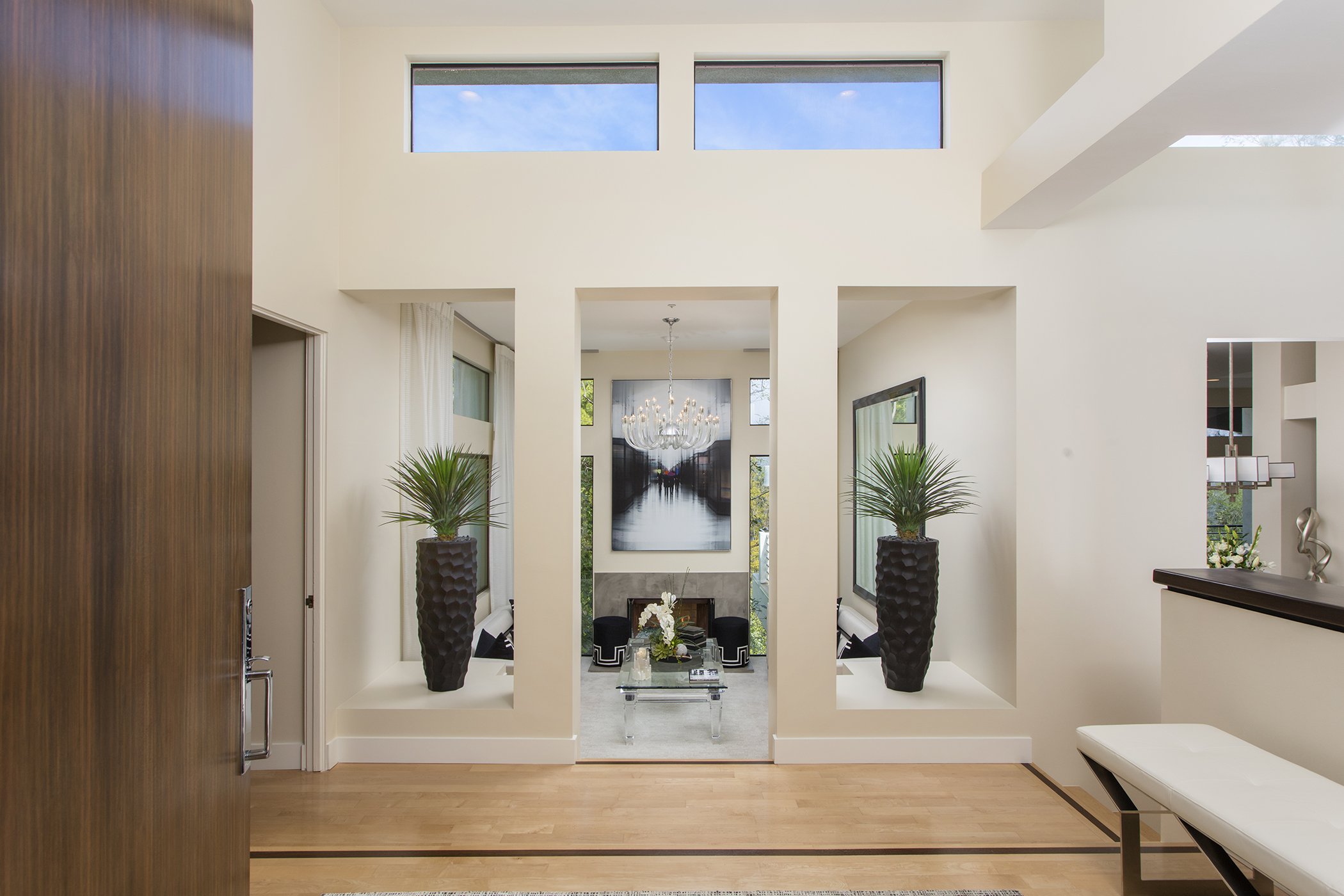
Before you open a single swatch fan, look at what is already fixed in the room. Countertops, flooring, cabinetry, and large upholstered pieces are far more expensive to change than paint, so the wall color needs to answer to them, not the other way around. Pull the undertones out of your countertop or floor first. A warm wood floor with golden undertones will fight a cool, blue-gray wall color, even if that wall color looks beautiful in a showroom. If you are mid-renovation and still choosing finishes, our countertop guide is a useful place to start, since countertop and paint decisions really need to happen together rather than in sequence.
Test Paint in the Actual Room
A color chip under store lighting tells you almost nothing about how that color will behave on your walls. Paint reads differently depending on the direction a room faces, the time of day, and whether the light is natural or artificial.
Coastal Daylight
Coastal homes tend to get a lot of bright, warm natural light, especially in rooms with west or south facing windows. That light can wash out a pale color and make it look almost white by midafternoon, while intensifying a saturated color well beyond what it looked like on the swatch. Paint large sample boards, at least two feet square, and move them around the room across a full day before committing.
Evening and Artificial Light
The same wall can shift dramatically once the sun goes down and lamps take over. Warm bulbs tend to deepen a color and pull out its undertones, while cooler LED lighting can flatten a color or expose a greenish or purple cast that was invisible during the day. If a room gets heavy evening use, like a dining room or primary bedroom, check the color under your actual bulbs before you paint the whole wall.
Read the Undertone, Not the Name
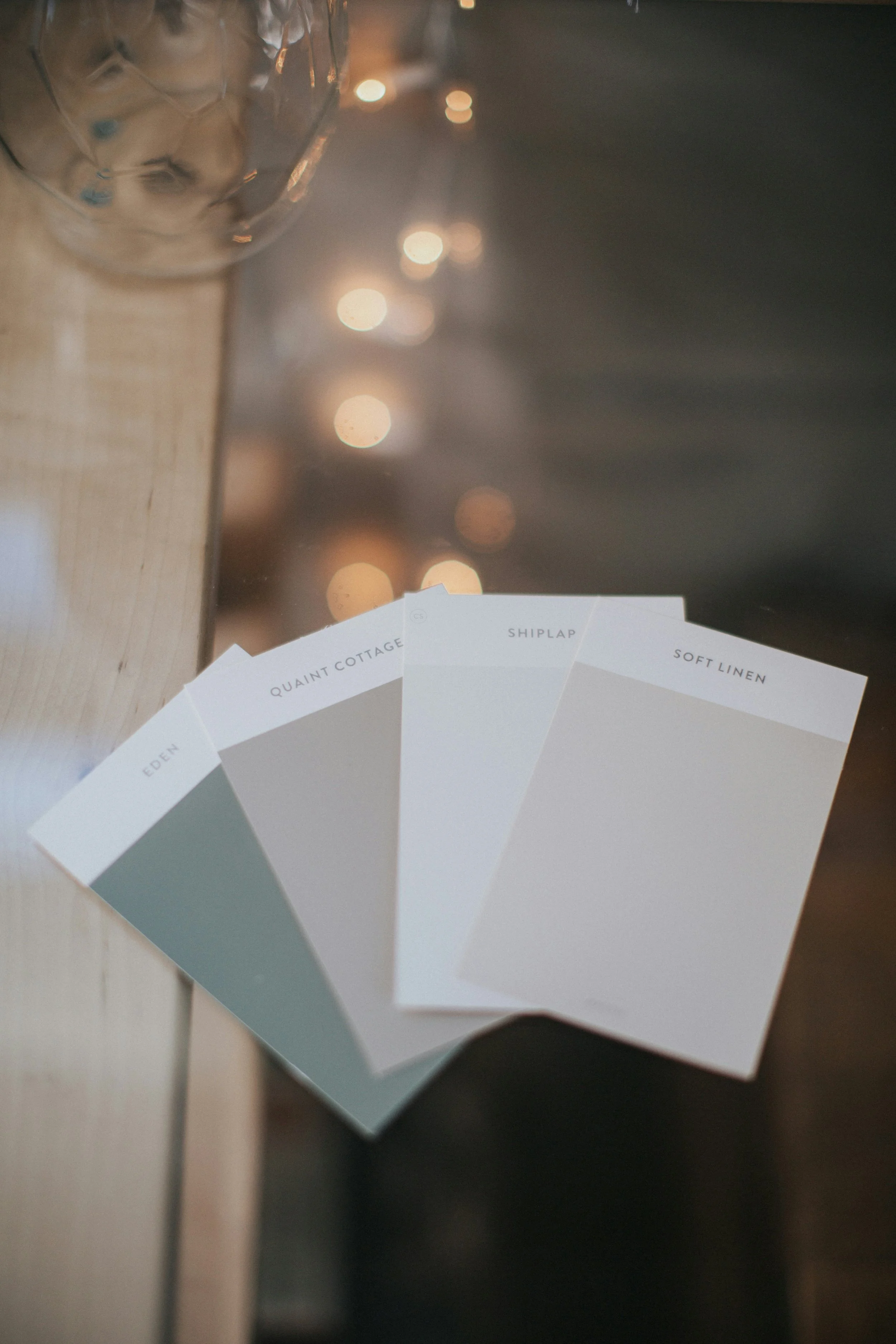
Paint names are marketing, not information. A color called "warm gray" can still carry a cool blue or green undertone once it is on a large wall, and that undertone is what determines whether the room feels calm or slightly off. The easiest way to catch an undertone is to compare your candidate against a true neutral, like a plain white card, in the same light. Held on its own, a color can look neutral. Held next to something truly neutral, the undertone usually shows itself immediately.
This is the same logic that governs how any two colors sit together in a room, not just paint. If you want the fuller picture, our color theory guide breaks down how undertone, contrast, and temperature interact, and that same thinking applies whether you are choosing a wall color or a sofa fabric.
Think About the Whole House, Not One Room
A paint color rarely lives in isolation. Sightlines between an open kitchen and living room, a hallway that connects three bedrooms, a staircase that ties two floors together, all of these mean your new color will be seen next to whatever is already on the surrounding walls. Rather than choosing room by room, map out which spaces are visible from each other and choose colors that share either an undertone family or a consistent value, even if they are not the exact same shade. This is what keeps a home feeling considered as you move through it, rather than like a series of unrelated decisions. It is one of the reasons a full residential interior design plan tends to outperform a room-by-room approach, since color decisions get made with the whole floor plan in view from the start.
When It Is Worth Bringing in Help
Paint is inexpensive to buy and expensive to get wrong across an entire home, especially once you factor in the labor of repainting a room that just is not working. If you have narrowed a palette down to a handful of options and still cannot commit, or if you are coordinating color across a full renovation with new finishes and furniture, that is exactly the point where a second set of trained eyes pays for itself. Our team works through these decisions with clients every week, weighing light, fixed finishes, and furnishings together rather than picking a wall color in isolation. If you would rather stop guessing and start with a plan, reach out to our team and we can walk through your space together.