
Types of Countertops: A Complete Guide to Materials, Style, and Performance
Countertops are one of the most impactful surfaces in any home. They set the tone for your kitchen or bathroom while also needing to withstand daily use. The right choice isn’t just about what looks good, it’s about how the material performs over time and how it fits into the overall design of your space.
If you’re exploring the different types of countertops, this guide breaks down the most common materials, along with their pros, limitations, and where each one works best.
If you’re looking for home design help, Marc Pridmore Interiors offers custom interior design services to help shape your home. Based in California, we serve clients nationwide.
| Material | Durability | Maintenance Level | Heat Resistance | Stain Resistance | Price Range | Best For |
|---|---|---|---|---|---|---|
| Quartz | High | Low | Medium | High | $$–$$$ | Busy kitchens, low-maintenance homes |
| Marble | Medium | High | High | Low | $$$–$$$$ | Bathrooms, statement islands |
| Granite | High | Medium | High | Medium | $$–$$$ | Traditional kitchens, high-use areas |
| Quartzite | High | Medium | High | Medium | $$$–$$$$ | Marble look with more durability |
| Butcher Block | Medium | High | Low | Low | $$ | Accent areas, islands |
| Concrete | High | Medium | High | Medium | $$$ | Modern, custom designs |
| Solid Surface | Medium | Low | Low | Medium | $$ | Seamless, minimal spaces |
| Porcelain | High | Low | High | High | $$$–$$$$ | Indoor/outdoor use, modern homes |
Quartz Countertops
Quartz is one of the most widely used countertop materials today, especially in modern and transitional homes.
It’s an engineered material made from natural quartz combined with resins, which gives it a consistent look and strong performance.
Why people choose quartz:
Non-porous, so it resists stains and bacteria
Does not require sealing
Extremely durable and low maintenance
Available in a wide range of colors and patterns
Things to consider:
Less heat-resistant than natural stone
More uniform appearance (which some people love, others don’t)
Quartz is a reliable, low-maintenance option that works well in busy kitchens where durability matters just as much as aesthetics.
Marble Countertops
Marble is often considered the most luxurious countertop material. Its natural veining and soft movement create a timeless, elevated look.
Why people choose marble:
Unique, one-of-a-kind patterns
Classic, high-end appearance
Naturally cool surface (great for baking)
Things to consider:
Porous and prone to staining
Can etch from acidic substances like lemon or vinegar
Requires regular sealing and more careful maintenance
Marble is ideal for spaces where design is the priority, such as bathroom vanities or statement kitchen islands.

Granite Countertops
Granite has been a long-standing favorite for its durability and natural beauty. Each slab is unique, offering variation in color and pattern.
Why people choose granite:
Heat and scratch resistant
Strong and long-lasting
Adds natural character to a space
Things to consider:
Requires periodic sealing
Patterns can feel busy depending on the slab
Granite works well in kitchens that need a durable surface but still want a natural stone look.
Quartzite Countertops
Quartzite is a natural stone that is often confused with quartz, but it’s actually closer to granite in terms of durability.
Why people choose quartzite:
Marble-like appearance with more durability
Resistant to scratching and heat
Natural, elegant aesthetic
Things to consider:
Needs sealing
Can be more expensive and harder to source
Quartzite is a strong option for those who want the look of marble without as much maintenance.
Butcher Block Countertops
Butcher block introduces warmth and texture that stone materials can’t replicate. It’s made from strips of wood bonded together to create a solid surface.
Why people choose butcher block:
Warm, natural look
Great for adding contrast to stone surfaces
Can be sanded and refinished over time
Things to consider:
Susceptible to water damage and scratches
Requires regular maintenance (oiling and sealing)
It’s often used on kitchen islands or as an accent rather than throughout an entire kitchen.
Concrete Countertops
Concrete countertops offer a more modern, architectural feel. They can be customized in terms of shape, color, and finish.
Why people choose concrete:
Fully customizable
Unique, one-of-a-kind look
Works well in contemporary spaces
Things to consider:
Can crack over time
Requires sealing
Heavier and more complex to install
Concrete is best suited for design-forward homes where customization is a priority.
Solid Surface Countertops
Solid surface materials are man-made and designed to create a smooth, seamless appearance.
Why people choose solid surface:
Seamless installation
Easy to repair minor scratches
Integrated sinks and backsplashes
Things to consider:
Less heat-resistant than stone
Not as high-end in appearance
These are a practical option for low-maintenance applications where a clean, minimal look is desired.
Porcelain Countertops
Porcelain is becoming increasingly popular due to its durability and versatility.
Why people choose porcelain:
Highly resistant to heat, scratches, and stains
UV-resistant (can be used outdoors)
Available in large slabs with minimal seams
Things to consider:
Can be more expensive
Edges and fabrication require skilled installation
Porcelain is a strong contender for both indoor and outdoor applications, especially in modern designs.
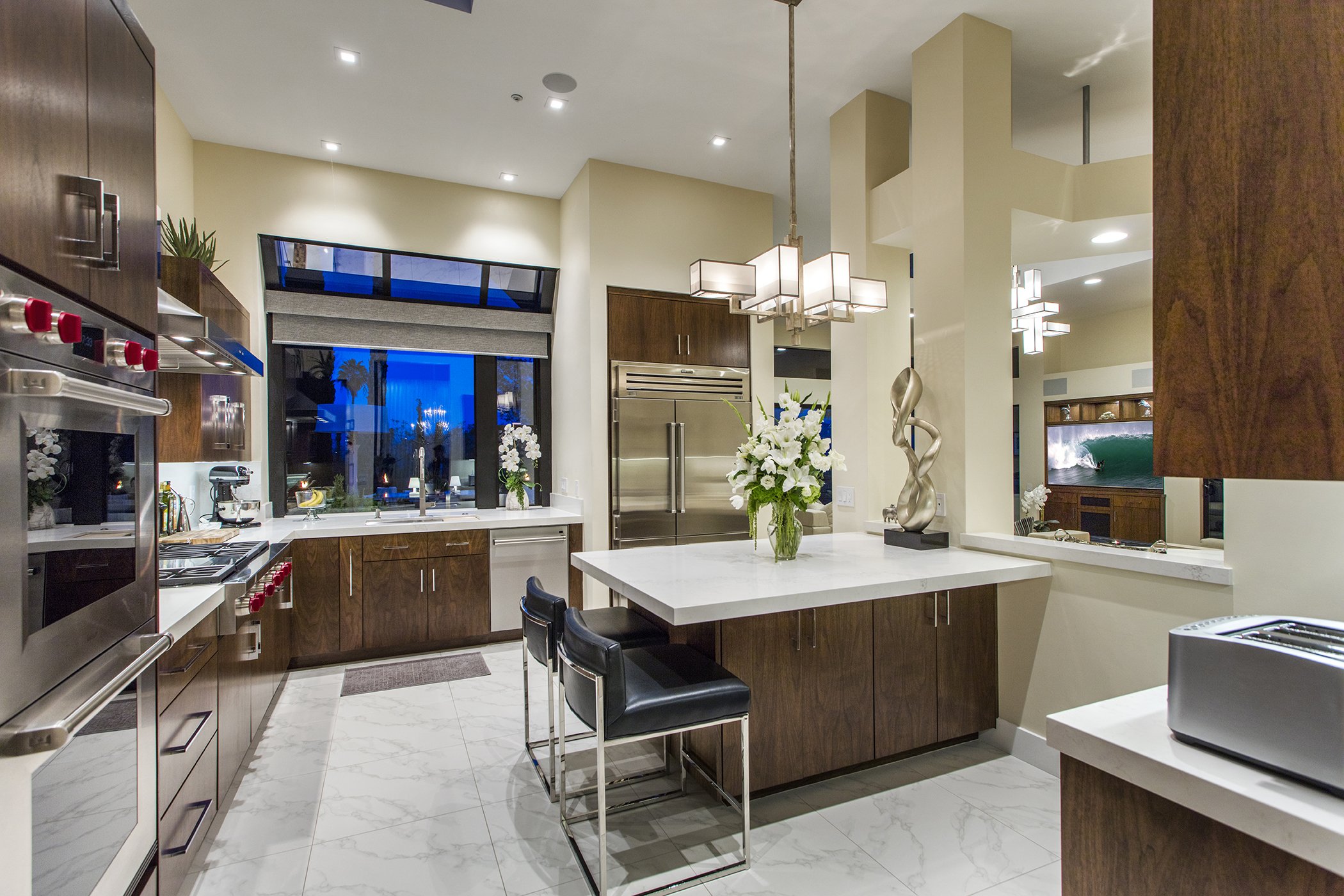
How to Choose the Right Countertop
With so many options available, the best choice depends on how you use the space and what you value most.
Ask yourself:
Do you want something low maintenance or are you okay with upkeep?
Is durability a top priority, or is this more of a design-driven space?
Do you prefer a natural, organic look or something more consistent and controlled?
How will this material pair with cabinetry, flooring, and overall style?
There’s no one-size-fits-all answer. The right countertop is the one that fits both your lifestyle and the design direction of your home.
Countertops are more than just a surface—they’re a defining element of the space. Whether you’re drawn to the natural beauty of stone, the consistency of engineered materials, or the warmth of wood, each option brings something different to the table.
Taking the time to understand the pros and limitations of each material will help you make a decision that not only looks good on day one but continues to perform for years to come.